
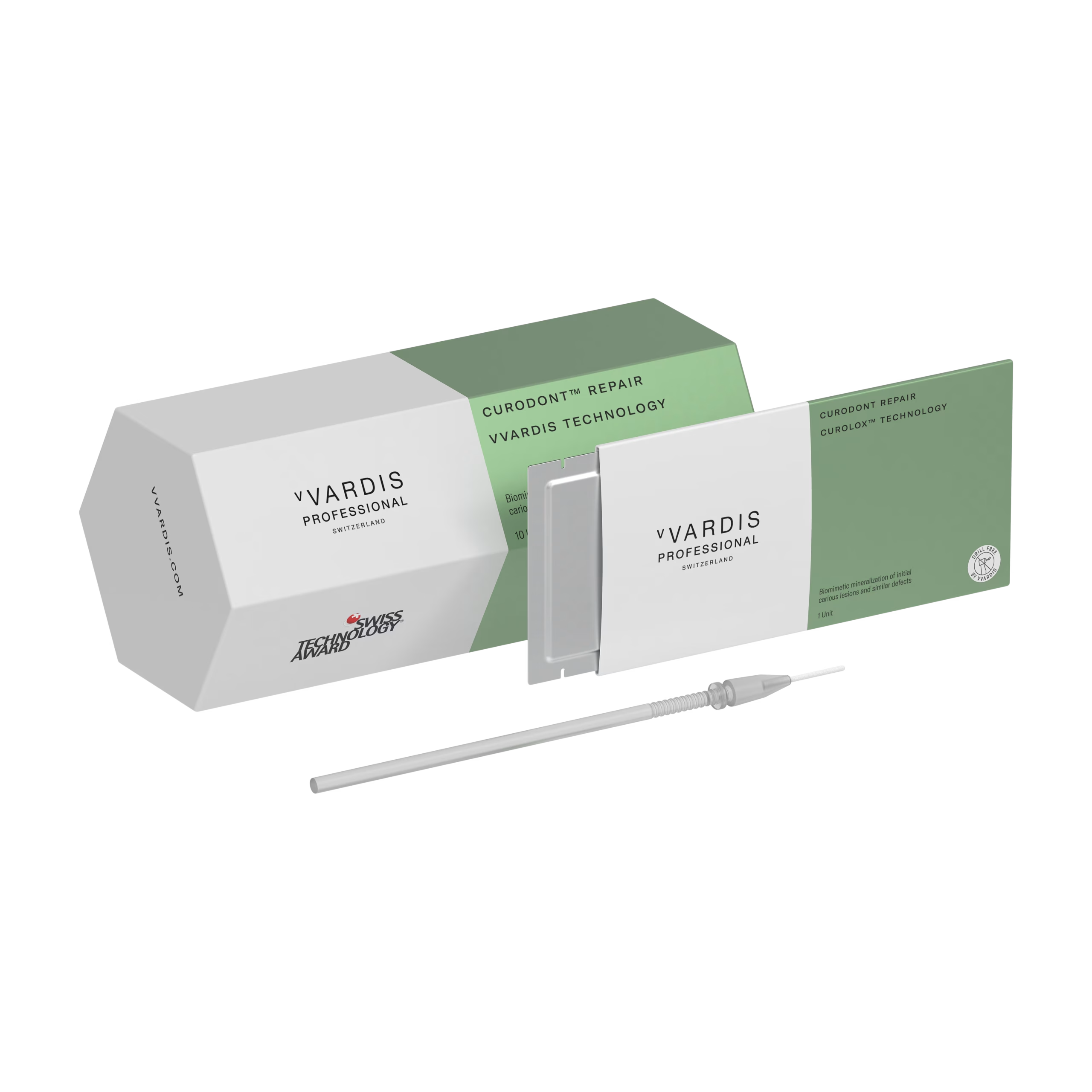
Peptide Dentistry and Enamel Regeneration: How Curodont Supports Natural Tooth Repair
Modern dentistry is rapidly evolving toward treatments that work with the body’s natural biology rather than against it. One of the most exciting innovations in preventive and regenerative dentistry is peptide-based enamel regeneration, a technology used in treatments such as Curodont®.
For patients seeking a biological or holistic dentist in Virginia, Maryland, or Washington DC, peptide dentistry represents a breakthrough in minimally invasive dental care. Instead of waiting for cavities to develop and then repairing them with fillings, peptide therapies help restore and strengthen enamel at the earliest stage of tooth decay.
At Virginia Biological Dentistry, preserving natural tooth structure is one of the core principles of our approach. Peptide-based treatments align perfectly with the philosophy of biological and biomimetic dentistry, which focuses on supporting the body’s natural ability to heal and regenerate.
Understanding Tooth Enamel and the Early Stages of Tooth Decay
Tooth enamel is the hardest substance in the human body. It is composed primarily of hydroxyapatite crystals, arranged in a highly organized structure that protects the tooth from physical wear and bacterial attack.
Despite its strength, enamel can gradually lose minerals through a process called demineralization. This process begins when acids produced by oral bacteria dissolve calcium and phosphate from the enamel surface.
Early signs of enamel demineralization may include:
• white spots on teeth
• increased sensitivity
• weakened enamel structure
• early microscopic damage beneath the surface
At this early stage, the enamel surface may still appear intact. However, the mineral structure inside the enamel has already started to weaken. Biological dentistry focuses on early detection and regenerative therapies that can restore enamel before structural damage occurs.
Peptides in Dentistry: A New Approach to Tooth Repair
Peptides are short chains of amino acids that act as biological signaling molecules in the body. In recent years, scientists have discovered that certain peptides can guide tissue regeneration.
In dentistry, researchers developed a self-assembling peptide known as P11-4, which has the ability to support enamel remineralization.
When applied to early enamel lesions, these peptides:
• penetrate microscopic pores within the enamel
• assemble into a three-dimensional matrix
• attract calcium and phosphate ions
• support the formation of new enamel crystals
This process mimics the natural biological mechanisms involved in tooth development during childhood.
Because peptide therapy helps rebuild mineral structure within the enamel, it represents a major advancement in regenerative and biomimetic dentistry.
What Is Curodont®?
Curodont is a professional dental treatment that uses self-assembling peptide technology to promote the regeneration of enamel. The treatment contains the peptide P11-4, which forms a microscopic scaffold inside areas of weakened enamel. This scaffold attracts minerals naturally present in saliva and guides the formation of new hydroxyapatite crystals.
This process is often referred to as guided enamel regeneration. Unlike traditional dental procedures that remove tooth structure, Curodont supports the body’s natural remineralization process.
It is most commonly used for:
• early cavities
• enamel demineralization
• white spot lesions after orthodontics
• high-risk patients prone to tooth decay
Because the treatment works on a microscopic level, it allows dentists to treat early decay without drilling or filling the tooth.
Peptide Treatments Work Best for Incipient Tooth Decay
The effectiveness of peptide dentistry depends greatly on detecting tooth decay early. Curodont and similar peptide treatments are most effective for incipient decay, which is the earliest stage of tooth decay.
What Is Incipient Decay?
Incipient decay refers to the very first stage of dental caries, when minerals begin dissolving from the enamel but the outer surface of the tooth remains intact.
At this stage:
• mineral loss occurs beneath the enamel surface
• microscopic pores develop within the enamel
• the tooth may appear as a white spot lesion
• there is no visible hole or cavity yet
Because the enamel surface is still intact, the tooth can often be remineralized and strengthened without drilling.
Peptide treatments work particularly well during this stage because the peptides can penetrate the microscopic pores within the enamel and guide mineral regeneration.
The Stages of Tooth Decay Explained
Tooth decay develops gradually through several stages. Understanding these stages helps explain why early detection is so important.
| Stage of Tooth Decay | What Happens in the Tooth | Signs or Symptoms | Treatment Approach |
|---|---|---|---|
| Stage 1: Incipient Decay (Early Demineralization) | Minerals such as calcium and phosphate begin dissolving from the enamel beneath the surface, but the enamel surface is still intact. | White spot lesions on the tooth surface, often no pain or symptoms. | Remineralization therapies such as peptide treatments (Curodont), fluoride, improved oral hygiene, and dietary changes. This stage can often be reversed. |
| Stage 2: Enamel Cavity Formation | Continued mineral loss weakens the enamel structure until the surface collapses and a small cavity forms. | Small holes or rough spots in enamel, mild sensitivity to sweets or cold foods. | Removal of decay and placement of a small dental filling or biomimetic restoration. |
| Stage 3: Dentin Decay | Decay spreads into dentin, the softer layer beneath enamel, allowing bacteria to move more rapidly through the tooth. | Increased tooth sensitivity, visible cavity, discomfort when eating sweet, hot, or cold foods. | Removal of decay and placement of a larger filling, ceramic inlay, or onlay depending on the extent of damage. |
| Stage 4: Pulp Infection | Bacteria reach the pulp chamber containing nerves and blood vessels, causing inflammation or infection. | Severe tooth pain, swelling, abscess, sensitivity to pressure or temperature. | Root canal treatment with endodontist or biological extraction with a natural dentist, depending on the condition of the tooth. |
How Curodont Works
The peptide therapy process is simple and minimally invasive.
Step 1: Early diagnosis: The dentist identifies areas of early enamel demineralization
Step 2: Tooth preparation: The tooth surface is gently cleaned.
Step 3: Peptide application: The peptide solution is applied to the lesion.
Step 4: Self-assembly: Peptides penetrate the enamel and form a microscopic scaffold.
Step 5: Mineral regeneration: Over time, calcium and phosphate ions from saliva deposit onto the scaffold and rebuild enamel crystals.
The treatment takes only a few minutes, but remineralization continues naturally over time.
Curodont and Fluoride: What Holistic Dentistry Patients Should Know
For patients concerned about fluoride, it is important to know that the U.S. version of Curodont currently used in dental offices, Curodont Repair Fluoride Plus, does contain a small amount of fluoride. Official U.S. labeling lists sodium fluoride 0.05%, which is lower than the fluoride concentration found in many common toothpastes and far lower than professional fluoride varnishes. At the same time, the main innovation behind Curodont is its self-assembling peptide technology, which is designed to create a biomimetic scaffold inside early enamel lesions and guide hydroxyapatite regeneration beneath the tooth surface. In Europe, peptide-based Curodont options are also available without fluoride, so product formulations differ by market.
Benefits of Peptide Dentistry
Peptide-based treatments offer several advantages.
-
Minimally invasive: No drilling is required when decay is detected early .
-
Preserves natural tooth structure: Healthy enamel is preserved rather than removed.
-
Supports natural healing: The treatment works with the body’s natural remineralization process.
-
Comfortable for patients: Most patients experience little to no discomfort.
-
Prevents cavity progression: Strengthening enamel can help prevent future decay.
A Biological Dentistry Perspective
In biological dentistry, the goal is not simply to treat cavities but to prevent them whenever possible. Peptide dentistry supports this philosophy because it allows dentists to intervene at the earliest stage of decay. Rather than repairing damage with artificial materials, the tooth’s own mineral structure can be strengthened and regenerated.
Biological Dentistry and the Mouth–Body Connection
Biological dentistry recognizes that oral health is closely connected to overall health. Chronic oral infections and inflammation can affect systemic health. By focusing on prevention, early diagnosis, and minimally invasive treatments, biological dentistry supports long-term wellness.
Peptide dentistry fits naturally into this philosophy because it:
• preserves natural tooth structure
• minimizes invasive procedures
• promotes natural healing processes
Peptide Dentistry in Virginia, Maryland, and Washington DC
Patients across the Mid-Atlantic region are increasingly seeking holistic and biological dental care.
Common searches include:
• biological dentist near me
• biological dentist Virginia
• holistic dentist Richmond VA
• holistic dentist Maryland
• biological dentist Washington DC
• biomimetic dentistry Virginia
Peptide dentistry is one of the technologies that helps biological dentists deliver preventive and regenerative dental care.
Our Biological Dentistry Approach to Preventing Tooth Decay
At Virginia Biological Dentistry, our approach focuses on:
• early detection of enamel changes
• minimally invasive treatment options
• supporting natural remineralization processes
• helping patients choose preventive strategies that align with their health preferences
If early demineralization is identified, peptide-based and other recommended therapies may help strengthen the tooth and prevent a cavity from developing.


