
More patients across Virginia are looking for alternatives to root canals, metal-free dental solutions, and biocompatible options that support long-term oral and systemic health. Many find themselves comparing:
Ceramic dental implants (zirconia, metal-free)
Titanium dental implants
Root canal therapy
Bridges (tooth-supported)
Extraction-only approaches
Each option has different implications for:
✔ Cost
✔ Longevity
✔ Biocompatibility
✔ Aesthetics
✔ Inflammation
✔ Microbiome health
✔ Immune system burden
✔ Convenience
✔ Long-term risks and re-treatment needs
This page examines these choices through the lens of clinical science, biological dentistry, and whole-body wellness — helping patients make informed decisions that reflect their values, sensitivities, and long-term goals.
Dental implants are considered the gold standard for replacing missing teeth. But titanium and ceramic behave differently — biologically, chemically, aesthetically, and systemically. Below is a clinical and whole-body comparison.
Titanium has been used for decades because it integrates reliably with bone. However, biological dentistry recognizes important considerations:
High long-term survival rates
Strong, durable
Widely available
Cost may be lower than zirconia
Titanium corrosion and particle release can occur
Metal ions may trigger inflammation in susceptible individuals
Galvanic reactions (electric current between metal types)
Potential aesthetic issues at gumline
Some patients report metal sensitivity reactions
Titanium can interfere with oral microbiome balance
“Corrosion of titanium implants leads to particle release contributing to inflammatory reactions.”
Journal of the Mechanical Behavior of Biomedical Materials
🔗 https://www.sciencedirect.com/science/article/abs/pii/S1751616119305534
Zirconia implants offer a metal-free alternative that aligns with whole-body health goals.
100% metal-free
Hypoallergenic and biocompatible
No galvanic corrosion or ion release
Lower plaque accumulation on zirconia surfaces
Excellent soft-tissue integration
Naturally tooth-colored (no gray shadows)
Preferred by patients with autoimmune issues, metal sensitivity, or inflammatory disorders
Excellent long-term bone stability in multiple studies
“Zirconia implants show low bacterial adhesion and favorable soft tissue response.”
Clinical Oral Investigations
🔗 https://link.springer.com/article/10.1007/s00784-017-2269-1
May cost more than titanium
Requires experienced surgical planning
Patients choosing ceramic are often motivated by:
autoimmune conditions
history of metal sensitivity
chronic inflammatory illnesses
desire for a chemically neutral oral environment
interest in preventing galvanic or galvanic-microcurrent disturbances
avoiding long-term corrosion risks
aligning with holistic philosophies
Biological dentistry emphasizes minimizing toxic load, immune stress, and systemic inflammation — which is why many patients prefer ceramic.

This is one of the most complex decisions in dentistry, and biological dentists approach it with caution, neutrality, and respect for patient values.
Root canal therapy removes infected pulp tissue and seals the inside of the tooth.
Can relieve pain
Keeps the natural tooth in place
Can be cost-effective short-term
Biological dentists believe patients should understand:
A root-canal-treated tooth no longer has blood supply
Biofilms may persist in microscopic tubules
Some research indicates potential release of bacterial toxins
Some patients experience chronic inflammation near the treated tooth
If a root canal fails, retreatment or extraction becomes necessary
Crowns are usually needed afterward (additional cost + tooth removal)
“Residual microorganisms may persist in dentinal tubules after root canal treatment.”
Journal of Endodontics
🔗 https://www.jendodon.com/article/S0099-2399(17)30828-2/fulltext
Biological dentistry does not necessarily claim that root canals are “unsafe,” but does emphasize informed consent, systemic context, and patient-specific risk profiles.
Some patients exploring alternatives to root canals — especially in biological dentistry — prefer extraction with biologically guided implant placement, including:
infection removal
PRF-supported healing
ozone disinfection
metal-free implants
microbiome-friendly protocols
history of chronic illness
autoimmune flare-ups
sensitivity to toxins
unresolved symptoms near root-canal-treated teeth
preference for non-metal options
Biological dentists conduct:
CBCT imaging,
vitality testing,
periodontal analysis,
systemic health review
before helping a patient decide.
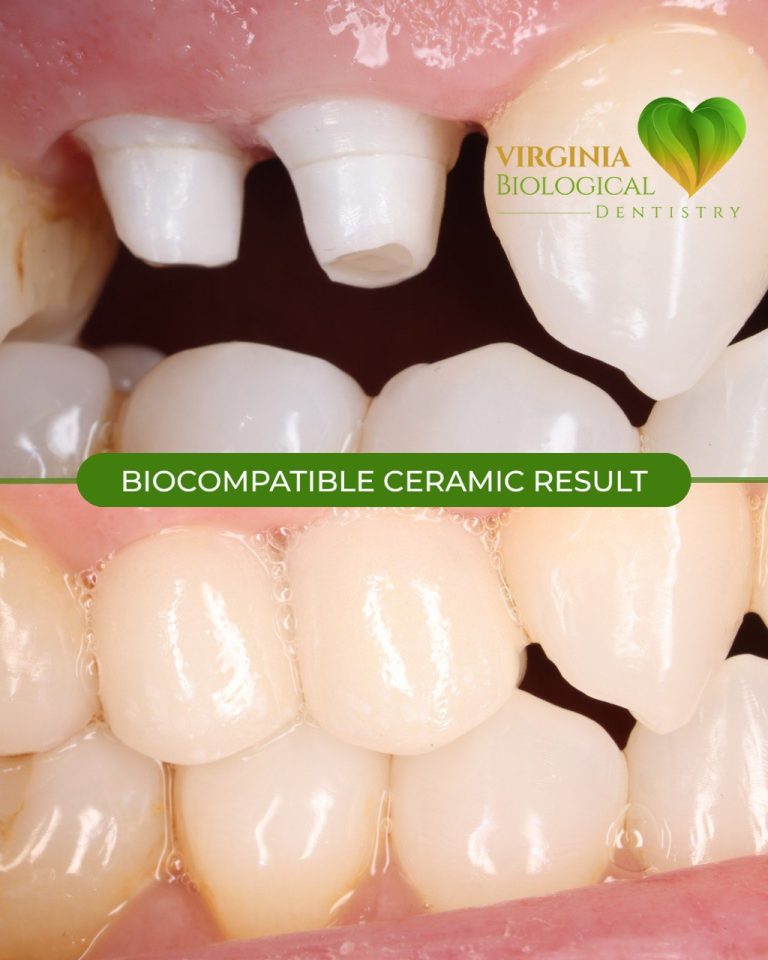
Bridges have long been used to replace missing teeth, but they require cutting down healthy neighboring teeth.
Faster than implants
Not a surgical procedure
Reasonable cosmetic result
60–70% removal of enamel on neighbor teeth
Higher chance of future decay under crowns
Teeth supporting the bridge may fail
Does not prevent bone loss
Often requires replacement every 10–15 years
In contrast, ceramic implants:
preserve neighboring teeth
prevent bone loss
do not decay
provide long-term stability
Many patients compare ceramic implants with removable prosthetics.
Lower initial cost
Immediate teeth replacement
No surgery required
Reduced chewing efficiency
Bone loss continues under dentures
Pressure sores
Gum irritation
Difficulty eating certain foods
Not fixed — removable
Can accelerate jawbone collapse
“Edentulism causes progressive mandibular bone loss due to disuse atrophy.”
Journal of Prosthetic Dentistry
🔗 https://www.sciencedirect.com/science/article/abs/pii/S0022391319301491
Ceramic implants stop bone loss and restore full bite function — a major long-term advantage.
Costs vary by provider skill, technology, material, and complexity.
These are Virginia-appropriate ballpark ranges for patient education:
Typical range (per extraction, implant + ceramic crown restoration):
$5,000–$11,000
Biological protocol cases and same-day placement of ceramic implants immediately after extractions with biological protocols will be in the highest range.
Typical range:
$4,000–$6,500
Root canal: $1,200–$1,800
Crown: $1,500–$2,200
Total: $2,700–$4,000+
Three-unit bridge: $3,500–$7,500
Replacement every 10–15 years common.
$1,500–$3,000
But may require replacement every 5–10 years.
$4,000–$6,500
Does not stop bone loss.
One of the most overlooked biological differences between titanium and ceramic implants is their interaction with the body’s electrical and chemical environment.
A galvanic reaction occurs when two or more metals in the mouth create an electrical current due to the presence of saliva (which acts as an electrolyte).
Even a single titanium implant can create microcurrents if a patient also has:
metal fillings
metal crowns
orthodontic wires
metal partial dentures
or dissimilar metals in opposing teeth
strange metallic taste
burning-mouth sensations
gum irritation
headaches
feeling of “electricity”
chronic inflammation around the implant site
Biological dentistry does not claim this affects everyone — but acknowledges it as a potential factor for susceptible individuals, especially those with:
autoimmune disease
chronic inflammatory conditions
nervous system sensitivity
history of metal intolerance
“Galvanic currents generated between dissimilar metals in the oral cavity can contribute to corrosion and inflammatory responses.”
Journal of Oral Rehabilitation
🔗 https://onlinelibrary.wiley.com/doi/full/10.1111/joor.12528
because zirconia is non-conductive, non-metallic, and electrically inert.
Titanium implants can undergo:
micro-abrasion
corrosion
oxide-layer breakdown
particle release into surrounding tissues
This is documented in multiple analyses and case studies.
“Titanium biodegradation products were identified in peri-implant tissues and associated with inflammatory infiltration.”
Clinical Oral Implants Research
🔗 https://onlinelibrary.wiley.com/doi/10.1111/clr.13565
accumulation of metal particles
inflammatory responses
possible immune activation
changes in local microbiome behavior
Zirconia ceramic implants do not corrode or release ions.
This is one reason many patients with chemical sensitivities, autoimmune issues, or chronic systemic inflammation prefer ceramic.
Several studies show that zirconia surfaces accumulate less plaque and promote healthier gum tissue than titanium.
“Zirconia surfaces exhibit reduced bacterial adhesion compared to titanium, impacting long-term peri-implant health.”
Journal of Clinical Periodontology
🔗 https://onlinelibrary.wiley.com/doi/10.1111/jcpe.12901
less plaque retention
reduced inflammation
better soft-tissue attachment
lower risk of peri-implantitis
more favorable oxygen environment for healthy bacteria
For patients predisposed to periodontal inflammation or peri-implant disease, zirconia offers a biologically supportive alternative.
Although titanium is generally biocompatible, studies show certain patients exhibit:
heightened inflammatory cytokines around titanium
upregulation of immune markers
reactivity to metal ions
sensitivity to corrosion byproducts
Autoimmune patients are often the ones who express interest in metal-free alternatives.
Zirconia tends to show:
lower inflammatory response
stable soft-tissue integration
minimal ion release
excellent biocompatibility
“Zirconia demonstrates favorable immune modulation compared with titanium implants.”
Materials Science & Engineering C
🔗 https://www.sciencedirect.com/science/article/pii/S0928493118306201
Although titanium is generally biocompatible, studies show certain patients exhibit:
heightened inflammatory cytokines around titanium
upregulation of immune markers
reactivity to metal ions
sensitivity to corrosion byproducts
Autoimmune patients are often the ones who express interest in metal-free alternatives.
Zirconia tends to show:
lower inflammatory response
stable soft-tissue integration
minimal ion release
excellent biocompatibility
“Zirconia demonstrates favorable immune modulation compared with titanium implants.”
Materials Science & Engineering C
🔗 https://www.sciencedirect.com/science/article/pii/S0928493118306201
Historically long-lasting, but failure often occurs due to:
peri-implantitis
corrosion
poor soft-tissue sealing
systemic inflammation influencing bone loss
Modern zirconia implants show comparable survival rates, with benefits in:
soft-tissue stability
resistance to infection
bone-level preservation
reduced plaque retention
“Zirconia implants achieved survival rates similar to titanium over multi-year follow-up periods.”
Clinical Implant Dentistry and Related Research
🔗 https://onlinelibrary.wiley.com/doi/10.1111/cid.12941
Patients choosing biological dentistry are typically looking for:
reduced toxic load
reduced inflammation
metal-free solutions
minimized immune activation
avoidance of chemical exposure
alignment with holistic medical care
materials compatible with chronic conditions
Ceramic implants support that philosophy:
✔ no metal
✔ no corrosion
✔ no magnetic or electrical conductivity
✔ stable soft tissue response
✔ excellent gum attachment
✔ reduced inflammatory load
Gray metal shadow visible
Darkening of gumline
Recession reveals metallic color
Naturally tooth-colored
No gray cast
Better gum health → better aesthetics
Preferred in front teeth and thin biotypes
Many biological patients who come to us in Glen Allen / Richmond are searching online for:
“root canal alternatives Virginia”
“holistic root canal alternatives”
“biological implant dentist near me”
“ceramic implants Richmond VA”
Because root canals preserve a non-vital tooth, some patients with inflammatory or immune conditions prefer alternatives.
Biological dentistry provides education — not pressure — so patients understand:
root canals can be successful
some root canals remain asymptomatic for life
some harbor persistent bacteria
some fail quietly
some patients feel systemic effects, others do not
the choice is individual and medical history–dependent
Extraction + ceramic implant is sometimes chosen because it reduces:
bacterial load
chronic inflammation
microbiome disruption
immune burden
“Persistent microorganisms can survive within dentinal tubules even after root canal therapy.”
Journal of Endodontics
🔗 https://www.jendodon.com/article/S0099-2399(17)30828-2/fulltext
Requires:
frequent checkups
higher peri-implantitis monitoring
occasional management of gum irritation
potential revisions in cases of corrosion or inflammation
Requires:
routine hygiene
yearly imaging
excellent soft-tissue stability
minimal plaque accumulation
This is why many patients find ceramic more convenient long-term.
Advantages
Metal-free, electrically inert
No corrosion or ion release
Excellent soft-tissue integration
Lower plaque accumulation
Favorable immune response
Preserves adjacent teeth
Prevents jawbone loss
Superior esthetics (no gray gumline)
Disadvantages
Higher initial cost
Requires experienced surgical planning
Fewer prosthetic variations than titanium
Not suitable in every anatomy without regeneration
Advantages
Long clinical history
Widely available
Often lower initial cost
High survival rates in many populations
Disadvantages
Potential corrosion and particle release
Possible galvanic reactions
Metal sensitivity in susceptible patients
Higher plaque affinity
Esthetic issues in thin gums
May trigger inflammation in some individuals
Advantages
Preserves the natural tooth
Avoids extraction surgery
Can relieve acute pain
Lower immediate cost
Disadvantages
Tooth becomes non-vital
Residual bacteria may persist
Crown usually required (more tooth removal)
Retreatment or extraction possible
Some patients report systemic symptoms
Advantages
No implant surgery
Faster restoration
Predictable short-term function
Disadvantages
Requires grinding healthy adjacent teeth
Does not prevent bone loss
Higher long-term replacement rates
Risk of decay under crowns
Advantages
Lower initial cost
Non-surgical
Immediate tooth replacement
Disadvantages
Continued bone loss
Reduced chewing efficiency
Pressure sores and instability
Frequent adjustments
Long-term inconvenience
| Option | Typical Initial Cost | Long-Term Considerations |
|---|---|---|
| Ceramic Implant with Final Ceramic Crown Restoration Ceramic Implant Placed on the Same-Day/Immediately after Extraction with Biological Protocols with final Ceramic Crown Restoration | $6,000–10,000 $10,000- 11,000 | Long lifespan; bone preserved |
| Titanium Implant | $4,000–$6,500 | Monitor inflammation/corrosion |
| Root Canal + Crown | $2,700–$4,000 | Possible retreatment/extraction |
| Bridge | $3,500–$7,500 | Often replaced every 10–15 years |
| Partial Denture | $1,500–$3,000 | Bone loss; instability |
| Full Denture | $3,000–$6,500 | Ongoing bone collapse |
Ceramic Implants: Longer initial timeline; fewer long-term interventions
Root Canal + Crown: Faster initial relief; possible future retreatment
Dentures: Fast delivery; daily removal and ongoing adjustments
Biological dentistry prioritizes minimizing inflammation, avoiding unnecessary metals, supporting the microbiome, preserving bone and circulation, and reducing immune activation.
Yes
Metal-free; favorable for susceptible patients.
Often initially; may reduce long-term costs.
Case-specific; informed consent and patient-informed decision are key.
Genuine biological practices that place high-end ceramic implants with biological protocol are out of network with insurances to provide the highest possible care for their patients. Check if you have out of network benefits that can work well for you in your planning to work with a biological dentist to have ceramic implants placed with biological protocols.
Yes, when integrated properly.
At Virginia Biological Dentistry in Glen Allen and serving patients throughout Richmond and Virginia we help individuals seeking biological dental care, including ceramic implants to address their dental conditions that might impact their systemic health, and long-term wellness.
If you’re looking for a biological dentist or holistic dentist in Richmond, Virginia, we invite you to schedule a consultation and discover how whole-body dentistry can support your long-term health.
Click here to make an appointment now or call (804) 381-6238 or email at [email protected] to learn more.
