
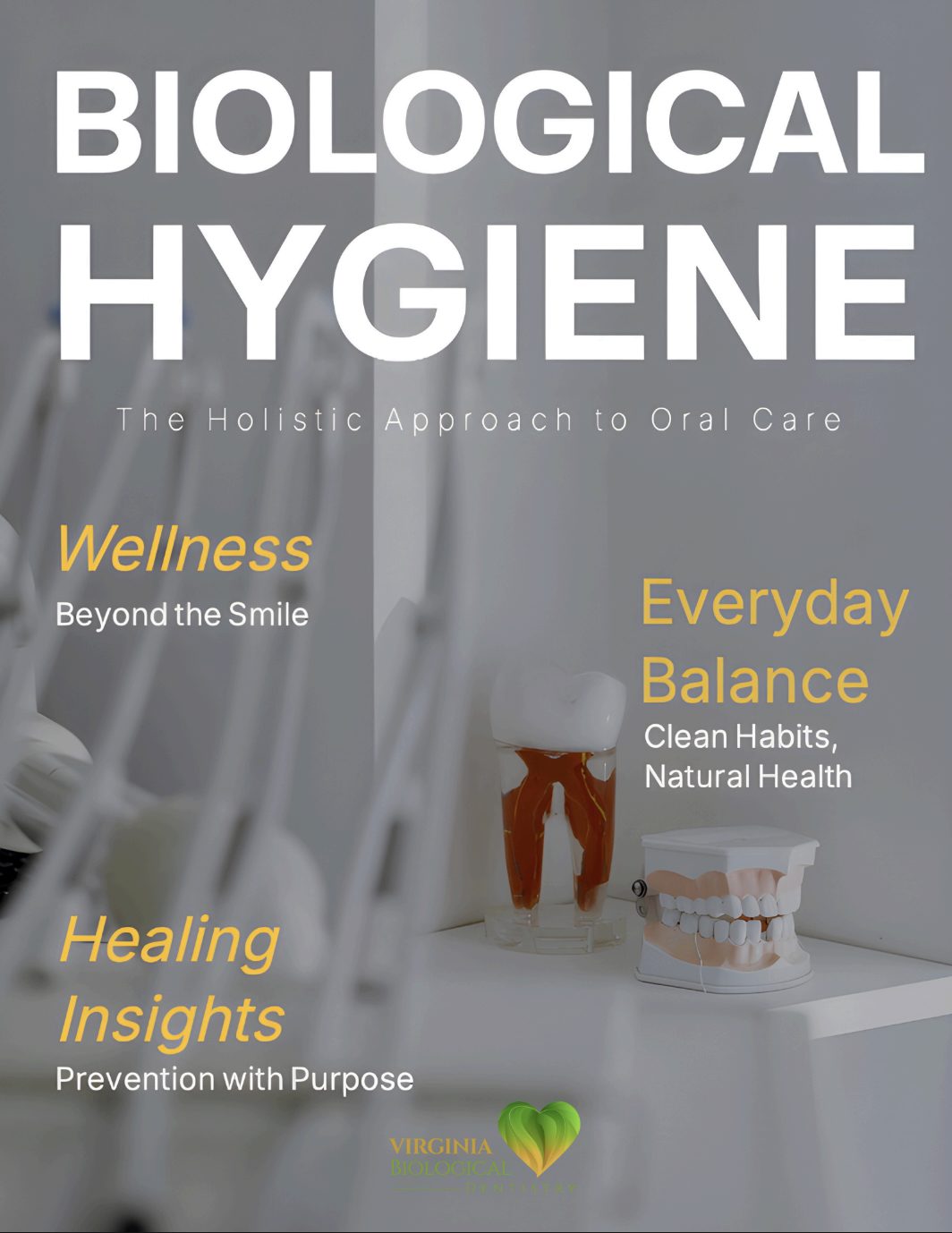
Biological Hygiene: A Holistic Approach to Gum Health in Virginia, DC Metro & Maryland by A Natural Dentist
A Complimentary Holistic Oral Health Guide — Created for Patients Who Think Differently
Before we go any further, there is something important you should know.
Within this article, you will find access to a comprehensive, complimentary educational guide prepared by our biological dentist, Dr. Olivia Hart. It was created specifically for holistically minded patients who want to understand their oral health at a deeper, biological level.
Dr. Hart did not create this guide as promotional material. She created it because many patients arrive in her office after years of conventional cleanings, still searching for answers why their gums bleed, why their pockets are deepening, or why inflammation keeps returning.
This guide was written for patients who:
- Believe the mouth is connected to the body
- Value biocompatible, toxin-conscious care
- Prefer minimally invasive and regenerative treatment
- Want to understand the biological drivers behind gum disease
- Are searching for a biological dentist near me in Virginia, DC Metro, or Maryland
If you have been searching for a holistic dentist in Virginia, a functional dentist in Washington DC, or an integrative periodontal approach and natural dentist in Maryland, this informational article — and the free guide within it — were prepared with you in mind.
The Quiet Moment When Patients Realize Something Isn’t Adding Up
It often begins in what seems like an ordinary dental appointment. Your hygienist measures your gums. You hear numbers: “Four… five… five… six.” You are told you have “deep pockets.”
Maybe you are advised to schedule a deep cleaning. Maybe you are reassured that it is “common.” Maybe you are told to floss more. But something does not feel complete.
You brush daily. You floss consistently. You eat reasonably well. You take care of your health.
So why is inflammation increasing? Why does bleeding persist? Why does tartar build up so quickly? Why does your breath still feel slightly off?
For many patients across Northern Virginia, Washington DC Metro, Maryland, Richmond, and Glen Allen, this is the moment the questions begin. And often, it leads to a search for something more biologically aligned.
Why Traditional Dental Cleanings Often Fail to Address the Real Problem
Conventional hygiene models focus primarily on mechanical removal.
That includes:
- Scaling hardened calculus (tartar)
- Polishing enamel
- Measuring pocket depths
- Scheduling six-month recalls
These steps are necessary.
But they are not sufficient.
Inflammation is not mechanical. It is biological.
If the ecological environment beneath the gumline remains unchanged, numbers may temporarily improve, yet the underlying inflammatory process persists.
Below is a clinical comparison that illustrates the difference:
| Conventional Cleaning Model | Biological Hygiene Model |
|---|---|
| Mechanical plaque removal | Biofilm ecology evaluation |
| Standardized recall intervals | Individualized risk-based intervals |
| Localized tissue focus | Systemic inflammatory awareness |
| Scaling & polishing | Laser and ozone integration when indicated |
| Structural metrics only | Functional and biological context |
When inflammation continues despite routine care, it is rarely because a patient is “not trying hard enough” or “not brushing enough.”
It is because the environment has not been addressed.
The Oral Ecosystem: More Than Plaque and Tartar
The human mouth contains hundreds of bacterial species. Some are protective. Some are neutral. Some become pathogenic when conditions shift.
Periodontal disease does not emerge simply because bacteria are present. It emerges when ecological balance is disrupted.
Several biological factors influence this balance:
| Factor | Influence on Gum Health |
|---|---|
| Oxygen levels in pockets | Anaerobic bacteria thrive in low oxygen |
| Immune regulation | Chronic stress alters immune response |
| Salivary composition | Mineral content affects tartar formation |
| Nutritional status | Micronutrients influence collagen repair |
| Systemic inflammation | Amplifies gum tissue response |
| Airway function | Mouth breathing dries tissues |
Traditional hygiene often addresses the result — plaque accumulation.
Biological hygiene evaluates the ecosystem.
The Mouth–Body Connection: Inflammation Is Never Isolate. Gum Health Is Systemic Health
Gum tissue is highly vascular and connected directly to systemic circulation.
Chronic periodontal inflammation has been studied in association with:
| Body System | Patterns Being Explored in Research |
|---|---|
| Cardiovascular | Atherosclerotic changes |
| Metabolic | Insulin resistance |
| Neurological | Neuroinflammatory pathways |
| Autoimmune | Immune dysregulation |
| Pregnancy | Inflammatory mediator impact |
For patients searching for a functional dentist in DC Metro or an integrative dentist in Maryland, this systemic awareness is often the reason they seek biological care.
They understand that reducing inflammatory burden is not cosmetic — it is foundational.
Bleeding Gums: A Biological Signal
Healthy gingival tissue does not bleed easily. Bleeding indicates increased vascular permeability and inflammatory activation.
It may reflect:
- Subgingival bacterial overgrowth
- Immune response escalation
- Collagen degradation
- Oxygen deprivation
- Systemic inflammatory load
Rather than dismiss bleeding as brushing technique, Dr. Hart evaluates the context in which it occurs. Because understanding the signal reduces fear — and increases clarity.
Deep Periodontal Pockets: An Oxygen and Ecology Issue
Healthy pockets measure 1–3 millimeters. At 4 millimeters, oxygen decreases. At 5–6 millimeters, anaerobic bacteria dominate. At 7 millimeters and beyond, structural stability becomes compromised.
| Pocket Depth | Ecological Environment | Clinical Implication |
|---|---|---|
| 1–3 mm | Oxygen-rich | Stable |
| 4 mm | Reduced oxygen | Early imbalance |
| 5–6 mm | Anaerobic dominance | Chronic inflammation |
| 7 mm+ | Advanced ecological shift | Bone involvement risk |
Traditional deep cleaning smooths root surfaces. Biological hygiene addresses the ecological environment within the pocket.
Gum Laser Therapy: Supporting Regeneration Without Aggressive Surgery
For patients searching for laser gum treatment near me in Virginia or DC Metro, laser-supported periodontal therapy represents a significant advancement.
Laser energy can:
- Reduce pathogenic bacteria
- Decrease inflammatory burden
- Support microcirculation
- Stimulate fibroblast activity
- Encourage collagen remodeling
Unlike conventional flap surgery, laser therapy is minimally invasive.
Surgical vs Laser-Supported Therapy
| Traditional Flap Surgery | Laser-Supported Therapy |
|---|---|
| Cutting & sutures | Minimal tissue trauma |
| Higher bleeding | Reduced bleeding |
| Extended recovery | Often faster healing |
| Structural removal | Biological modulation |
| Mechanical focus | Regenerative support |
Laser therapy aligns with Dr. Hart’s regenerative philosophy: preserve whenever possible, remove only when necessary.
Ozone Therapy: Oxygen as a Biological Tool
Ozone introduces highly oxygenated molecules into periodontal pockets. Anaerobic bacteria thrive in oxygen-poor environments. Ozone shifts that balance.
| Ozone Mechanism | Clinical Benefit |
|---|---|
| Oxidative bacterial disruption | Reduced pathogenic load |
| Increased oxygenation | Tissue support |
| Immune modulation | Balanced inflammatory response |
| Adjunct to laser therapy | Enhanced healing environment |
For patients in Maryland and Northern Virginia who prefer non-antibiotic adjuncts, ozone therapy offers a biologically aligned solution.
Chronic Bad Breath: A Subgingival Ecology Issue
Persistent halitosis is often subgingival. Sulfur-producing bacteria within deep pockets generate volatile compounds that surface treatments cannot fully eliminate.
| Symptom Strategy | Root-Cause Strategy |
|---|---|
| Strong mouthwash | Subgingival biofilm management |
| Mints & sprays | Laser-supported pocket reduction |
| Tongue scraping alone | Ozone + ecological balance |
When ecology shifts, symptoms often follow.
Does This Perspective Feel Different?
If this approach feels more comprehensive than what you have experienced before, that is intentional. Dr. Hart created the Biological Hygiene Guide to explain:
- The mouth–body connection in depth
- How laser therapy supports healing
- The science behind ozone
- Natural strategies for maintaining gum health
- Questions you should ask your dentist
The guide was created for patients who value understanding over assumption. If you think differently about health, it was written for you. Keep reading to download the free guide.
Advanced Periodontal Diagnostics: Looking Beneath the Surface of Inflammation
As biological dentistry evolves, one of the most significant advancements is the ability to identify exactly which bacteria are present in the mouth — not just whether inflammation exists.
Traditional periodontal evaluation measures:
- Pocket depth
- Bleeding on probing
- Radiographic bone levels
These metrics are essential. But they show what has already happened. Advanced periodontal diagnostics allow us to understand why it is happening.
Through molecular salivary DNA analysis, we can detect and quantify specific bacterial species living beneath the gumline — including those associated with aggressive periodontal breakdown and systemic inflammatory patterns. This transforms periodontal care from assumption-based to data-driven.
Why Identifying Specific Oral Pathogens Matters
Not all bacteria in the mouth are harmful. Many are protective. But certain species are strongly associated with:
- Rapid periodontal attachment loss
- Chronic gum inflammation
- Increased bone resorption
- Cardiovascular inflammatory patterns
- Insulin resistance
- Adverse pregnancy outcomes
- Neuroinflammatory pathways
When these bacteria dominate, the ecological balance shifts. Below is a comparison illustrating how diagnostics shift care:
| Conventional Periodontal Evaluation | Advanced Biological Diagnostic Approach |
|---|---|
| Measures structural damage | Identifies bacterial species present |
| Notes bleeding | Quantifies pathogenic load |
| Uses generalized protocols | Personalizes treatment plan |
| Reacts to pocket depth | Intervenes based on microbial risk |
For patients in Virginia, DC Metro, and Maryland who think in terms of root cause — not just symptom suppression — this level of clarity is invaluable.
The Mouth–Body Connection Made Measurable
For years, the link between periodontal disease and systemic health was discussed broadly. Now, we can observe more clearly how specific oral pathogens may influence other systems. Certain bacteria associated with periodontal disease have been identified in:
- Arterial plaque
- Cardiovascular inflammatory tissues
- Amniotic fluid in complicated pregnancies
- Synovial joint fluid
- Neural inflammatory environments
This does not mean oral bacteria independently cause systemic disease. It means chronic oral inflammation may contribute to systemic inflammatory burden.
For patients managing:
- Cardiovascular risk
- Metabolic conditions
- Autoimmune disorders
- Chronic inflammatory states
understanding their oral microbial profile may be an important piece of their overall health strategy.
Airway Influence: The Hidden Driver of Gum Instability
Few patients are told that breathing patterns influence gum health. Mouth breathing alters oral physiology in profound ways.
When we breathe through the mouth:
- Saliva evaporates more quickly
- Oral tissues dry out
- pH balance shifts
- Beneficial bacteria decrease
- Pathogenic bacteria gain advantage
Dry tissues inflame more easily and heal more slowly.
Airway Patterns and Periodontal Impact
| Airway Pattern | Biological Impact on Gums |
|---|---|
| Mouth breathing | Tissue dryness & inflammation |
| Sleep-disordered breathing | Immune dysregulation |
| Chronic clenching | Mechanical stress at gum margin |
| Grinding | Accelerated recession risk |
At Virginia Biological Dentistry, we evaluate airway awareness as part of a comprehensive biological hygiene model. Because stabilizing gum health sometimes requires stabilizing breathing patterns.
Calculus Biochemistry: Why Tartar Forms Differently in Each Patient
Some patients accumulate calculus rapidly, even with diligent hygiene. This is not simply about brushing technique. Tartar formation is influenced by biochemical factors.
Factors Influencing Calculus Formation
| Factor | Influence |
|---|---|
| Salivary calcium & phosphate | Promotes mineralization |
| Oral pH | Acidic shifts alter biofilm maturation |
| Biofilm age | Mature plaque mineralizes more easily |
| Dietary frequency | Frequent carbohydrate exposure fuels biofilm |
| Microbial composition | Certain species calcify faster |
In patients with rapid mineralization patterns, earlier biofilm disruption and ecological management are often more effective than aggressive scraping alone.
Systemic Longevity Alignment: Why Periodontal Stability Matters Long-Term
In longevity medicine, reducing chronic inflammation is a primary goal. Low-grade inflammatory burden has been associated with accelerated aging processes. Periodontal disease represents a chronic inflammatory stimulus.
When inflammation persists in the gums:
- Cytokines circulate systemically
- Oxidative stress increases
- Immune activation remains elevated
For patients in DC Metro and Northern Virginia who prioritize long-term health optimization, periodontal stability becomes part of a broader longevity strategy.
Biological hygiene aligns with:
- Preventive medicine
- Functional medicine principles
- Regenerative philosophy
- Inflammation reduction strategies
It becomes part of a comprehensive health plan — not just dental maintenance.
Precision Integration: Laser, Ozone, Diagnostics, and Ecology
When advanced diagnostics identify specific pathogens, we can tailor care precisely.
Treatment may include:
- Laser-assisted periodontal therapy
- Ozone-supported oxygenation
- Targeted antimicrobial strategies
- Adjusted recall intervals
- Lifestyle and airway modification
Rather than guessing, we respond to data. Rather than reacting to damage, we aim to prevent progression.
Is This Your Philosophy of Dental Care?
If you have read this far, you may recognize that this approach feels different. It may feel more thoughtful. More connected. More biological. That difference is intentional.
Dr. Hart has built Virginia Biological Dentistry around the principle that dentistry should respect the body’s biology.
The complimentary guide referenced earlier was written to provide clarity — not pressure.
Inside the guide, you will find:
- A detailed explanation of biological hygiene
- The science behind laser-supported periodontal therapy
- The role of ozone in reducing anaerobic bacterial load
- How advanced bacterial diagnostics uncover systemic connections
- Home care strategies for holistically minded patients
If this philosophy resonates with you, this short guide will deepen your understanding.
DOWNLOAD FREE GUIDE: BIOLOGICAL HYGIENE
Serving Virginia, Northern Virginia, Washington DC & Maryland With Precision Care
Patients who seek biological hygiene often travel. We regularly see patients from:
- Richmond
- Glen Allen
- Arlington
- Alexandria
- Fairfax
- McLean
- Washington DC
- Bethesda
- Rockville
- Annapolis
Many first find us by searching:
- Biological dentist near me DC
- Holistic dentist Maryland
- Laser gum therapy Virginia
- Functional dentist Northern VA
- Integrative periodontal treatment DC Metro
They are not simply looking for a cleaning. They are looking for alignment and regenerative dental care.
Frequently Asked Questions
What makes biological hygiene different from traditional dental cleaning?
Biological hygiene goes beyond removing plaque and tartar. It evaluates the oral microbiome, inflammatory patterns, airway influence, and systemic health connections. Rather than focusing only on mechanical cleaning, it may integrate ozone support, advanced bacterial diagnostics, and personalized maintenance intervals to address root causes of gum inflammation.
Can advanced bacterial testing predict systemic disease?
No test can diagnose systemic disease through saliva alone. However, advanced periodontal diagnostics can identify specific oral pathogens that have been associated in research with cardiovascular inflammation, metabolic dysfunction, pregnancy complications, and neuroinflammatory pathways. Understanding your microbial profile helps tailor care and reduce inflammatory burden.
Is gum laser therapy painful?
Most patients report minimal discomfort compared to traditional surgical approaches. Laser-supported periodontal therapy is designed to be minimally invasive, often reducing bleeding and shortening healing time.
How often is biological hygiene recommended?
Recall intervals are individualized. While many conventional practices recommend six-month visits for everyone, biological hygiene schedules are based on microbial findings, pocket depth, inflammatory patterns, systemic risk factors, and individual healing response.
Do you serve patients from DC Metro and Maryland?
Yes. Virginia Biological Dentistry regularly serves patients from Northern Virginia, Washington DC Metro, and Maryland who are seeking holistic, functional, and biological periodontal care.
Is this approach supported by research?
Emerging research continues to explore the relationship between periodontal pathogens and systemic inflammatory conditions. Biological hygiene aligns with this evolving understanding by addressing microbial ecology, inflammatory signaling, and whole-body health connections.
How do I know if I need biological hygiene instead of a regular cleaning?
If you experience bleeding gums, deep pockets, chronic bad breath, recurring inflammation, gum recession, or rapid tartar buildup despite routine cleanings, a biological evaluation may provide deeper insight into underlying causes.
Does biological hygiene help with bad breath?
Yes. Persistent halitosis is often linked to sulfur-producing bacteria in deep periodontal pockets. Biological hygiene focuses on subgingival ecology rather than masking odor.
Is biological hygiene safe for ceramic implants?
Yes. A biologically aligned hygiene approach is especially important for ceramic implants, as it supports tissue health while preserving the integrity of biocompatible materials.
Final Reflection: The Future of Periodontal Care
The future of periodontal care is not more aggressive intervention. It is greater understanding.
When we evaluate:
- Microbial ecology
- Inflammatory response
- Oxygen dynamics
- Airway function
- Systemic alignment
we move from reaction to precision.
For patients seeking a biological dentist near them in Virginia, DC Metro, or Maryland, biological hygiene offers a pathway aligned with longevity, clarity, and respect for the body. And for those who want to understand this approach fully, a short guide from our holistic dentist, Dr. Hart, remains available — thoughtfully prepared for patients who want to think beyond routine dentistry.


